Day nursery vs childminder: which is right for your family?
2 min read Last reviewed October 2026 Checked against official guidance
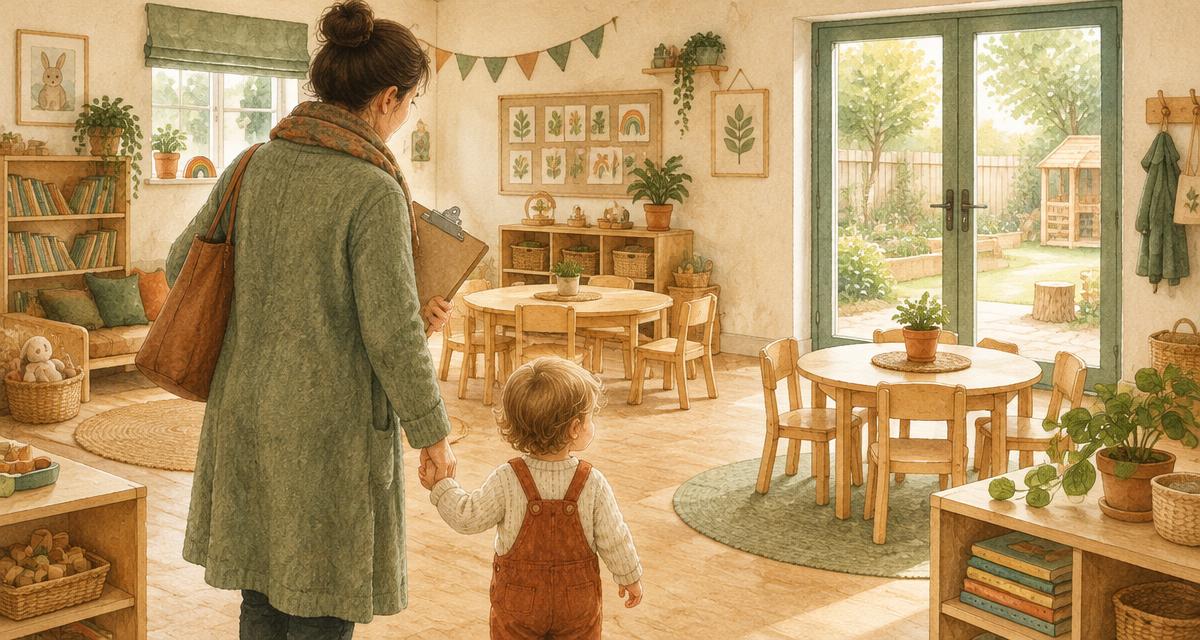
Both nurseries and registered childminders follow the same EYFS framework and can be inspected by Ofsted, but the day-to-day experience is quite different.
Same EYFS
Both follow the same framework
Both
Can take funded hours
Smaller groups
Typical with childminders
In this guide
1
Day nurseries
Larger settings with children grouped by age and a team of staff.
- Pro: rarely close for staff sickness or holidays
- Pro: lots of resources, peers and structured activities
- Pro: multiple qualified staff and management oversight
- Con: bigger, busier environment
- Con: less flexibility on hours and late pick-ups
2
Childminders
Self-employed carers looking after a small group of children, usually in their own home.
- Pro: home-from-home feel with one consistent carer
- Pro: mixed-age group, great for siblings
- Pro: often more flexible on hours and school pick-ups
- Con: you'll need back-up care if they're ill or on holiday
- Con: fewer facilities than a large nursery
3
How to decide
Think about your child's personality, your work pattern and how much back-up care you have. A quieter baby may thrive with a childminder; a sociable toddler may love nursery bustle.
Nursery and childminder at a glance
| Nursery | Childminder | |
|---|---|---|
| Setting | Purpose-built rooms, grouped by age | The childminder's own home |
| Group size | Larger, with several staff | Small, mixed ages (usually up to 6 under 8s) |
| Cover if staff are off | Other staff step in | You may need back-up care |
| Opening hours | Fixed, often 7.30am to 6pm | Often more flexible |
| Follows the EYFS? | Yes | Yes |
| Takes funded hours? | Usually | Many do, so ask |